Lesson #6: The Principle of Contrast
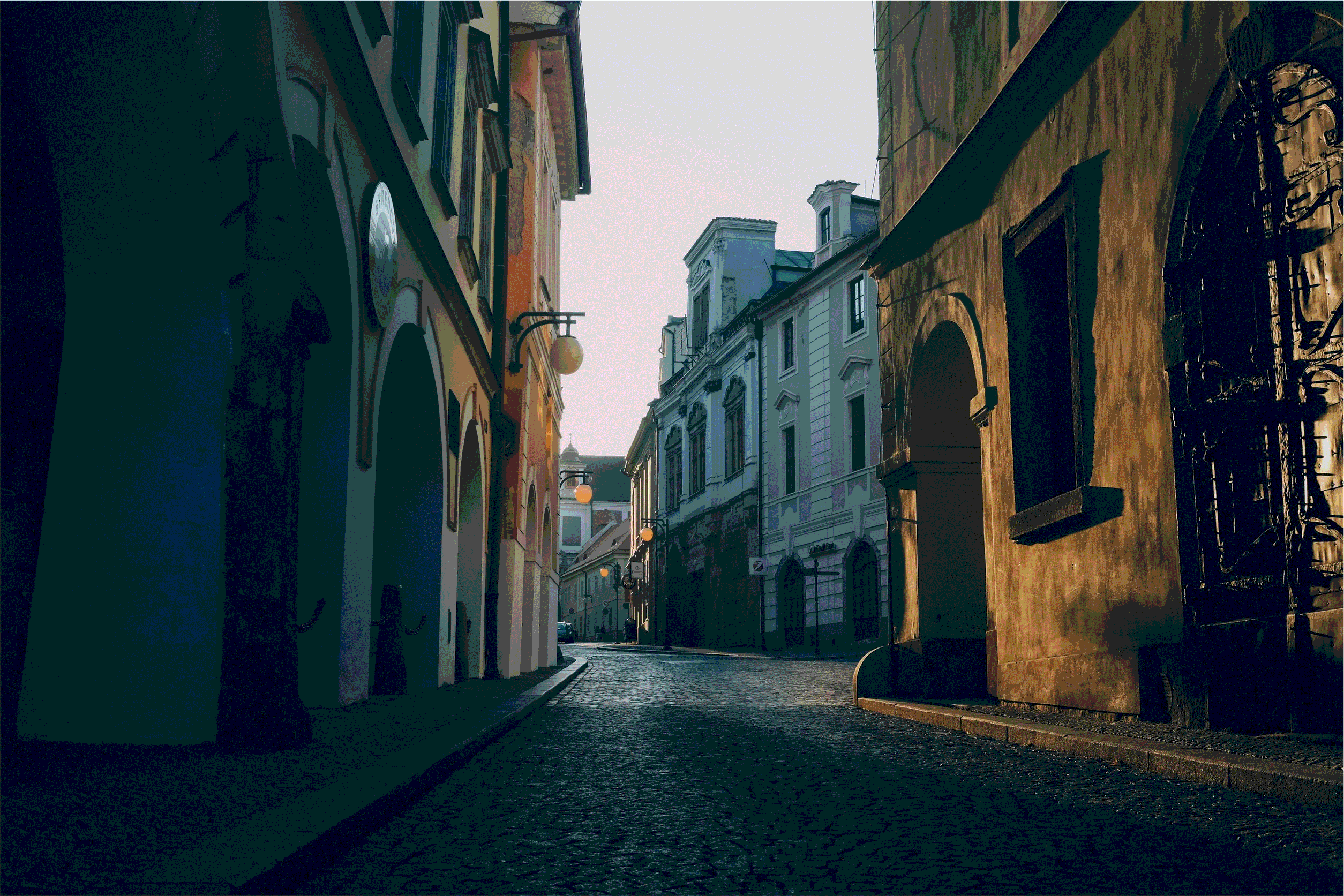
Contrast in art and design occurs when two related elements are different. The greater the difference the greater the contrast. Contrast adds variety to the total design and creates unity. It is what draws the viewer's eye into the painting and helps to guide the viewer around the art piece.
Contrast in art also adds visual interest. Most designs require a certain amount of contrast. Too much similarity of the components in any design becomes monotonous. In other words the use of too little contrast can cause a design to be bland and uninteresting. On the other hand too much contract can be confusing. Just the right amount of contrast engages the viewer's participation in comparing various components of the work. For instance, the viewer will compare light and dark areas of a painting, wide lines and thin lines, light-weight forms and heavy forms, filled spaces and unfilled spaces, etc.
The key to working with contrast is to make sure the differences are obvious. The most common ways of creating contrast are by creating differences in:
• size
• value
• color
• type
• texture
|
• shape
• alignment
• direction
• movement
|
Examples of the effective use of Contrast

The contrast in the illustration to the left is quite obvious. Notice the contrast of the light background (wall) with dark foreground (table cloth) and the contrast of the dark shadows on the tea pot and cup against the wall and with the lights of the same objects against a dark window.
There is also a contrast of thin and thick lines in the napkin, straight and curved lines, and don't miss the dark steam as contrasted with the light clouds off in the distance.

On the right a contrast exists between the lights and darks. Also notice the contrast of the roundness of the objects in the foreground against the flatness of the background.

In the painting on the left is another example of contrast between light and darkness.

Contrast in the painting on the right is much more subtle. Contrast this painting is in texture. Notice the hard texture on the fence as contrasted with the softness of the butterflies and the kittens. Also a contrast exists between the soil and the foliage.
Your Next Art Lesson
Click on a link below to proceed on to the next lesson or go back and study a previous one or return to the
Art Lesson Index to select your next lesson.
• Lesson #1: Introduction
• Lesson #2: The principle of balance
• Lesson #3: The principle of movement
• Lesson #4: The principle of emphasis
• Lesson #5: The principle of simplicity
• Lesson #6: The principle of contrast
• Lesson #7: The principle of proportion
• Lesson #8: The principle of space
• Lesson #9: The principle of unity
|